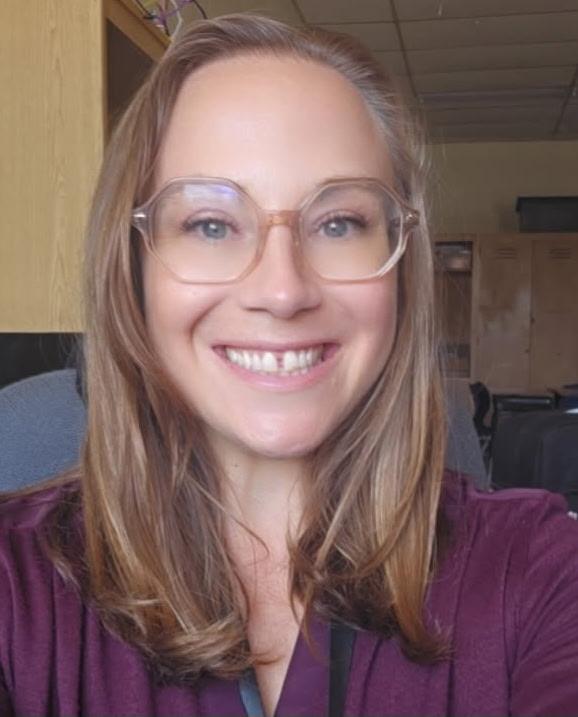
Katie Hoeck
Lead Data Analyst, Website Creation, Research.
Katie volunteers as Lead Data Analyst for Eastern Panhandle United, contributing research
and building the website. She grew up in the Eastern Panhandle and earned her B.S. in
Mathematics, with a minor in Physics, from Shepherd University. She also holds
an M.S. in Data Science from Eastern University. She has spent more than a
decade in public education as a STEM educator and department chair and has served as a
field researcher coordinator for numerous national social science studies.
Katie got involved because reliable information about data centers is hard to find, and
much of what circulates is incomplete or misleading. She wants this site to help residents
understand what these facilities are and how today's purpose-built AI hyperscale proposals differ
from the data centers that came before them so they can weigh the claims being made and decide
for themselves whether or not these facilities belong in their communities.
Photo
Jon "Shayne DiMarino
Jon “Shayne” DiMarino is a lifelong advocate for environmental protection and social justice.
He currently serves as coordinator for Berkeley Indivisible in Berkeley County, West Virginia,
and as an “Agent of Hope,” a leadership role within Hope in Alliance, a community advocacy
organization serving West Virginia’s Eastern Panhandle.
Shayne holds a bachelor’s degree in Geography and Environmental Systems from the University of Maryland,
Baltimore County (UMBC). His professional background includes teaching college history at Blue Ridge
Community and Technical College and a career in cybersecurity and training, where he has worked as a
federal government contractor since 2015.
A longtime resident of Berkeley County, Shayne is committed to protecting West Virginia’s environment,
advancing social justice, and promoting responsible development that serves the public interest.
He opposes the passage of West Virginia House Bill 2014 and raises concerns about the unchecked development
of artificial intelligence (AI) infrastructure and data centers in the state, particularly their potential
environmental and community impacts.
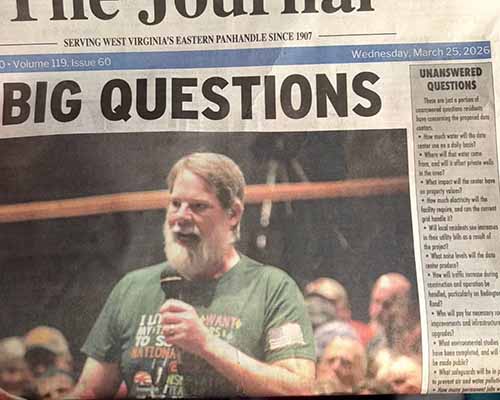
Frank Muth
Frank Muth , grew up in rural New Jersey, named after his great grandfather who graduated with a
degree in Forestry, Frank’s family raised chickens, goats, and rabbits and made most things from
scratch before it was cool. From an early age he was encouraged and impassioned to pursue a path
connected to nature. He decided on a federal career so that he could not only study the natural world,
but he would also be in a position to advocate for the wild places, animals, and ecosystems that are
under constant threat of sacrifice on the altar of capitalism and “progress”.
Frank considers himself a DOGE (the so-called Department of Government Efficiency) retiree, as of April 2025.
He retired both for his mental health, and to protect his course leaders just beginning their careers.
Frank spent 32 years serving the American public, as a Fish and Wildlife biologist. His major focus during
that time was with the Endangered Species Act.
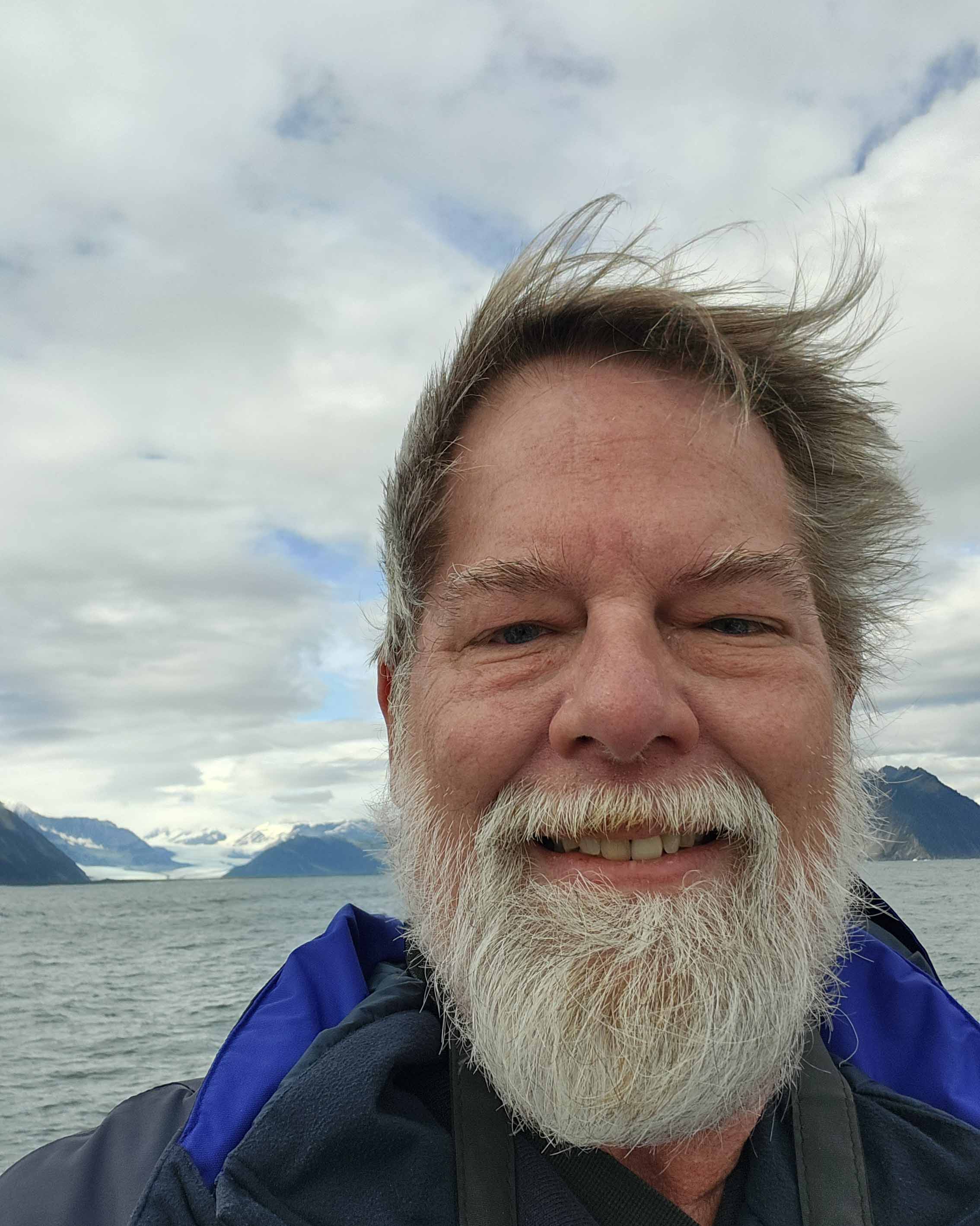
Frank became vocal about the current administration’s unlawful, immoral actions immediately after retiring.
He felt he had fought the good fight from within the government, and now was his time to fight and raise his
voice with like-minded others as a private citizen. He fights against authoritarianism, data centers/transmission
lines, and for equality and due process for all, as a resident of Berkeley County, WV.
Prior to retiring, Frank was a Curriculum Manager (Lead Fish and Wildlife Biologist) with the U.S. Fish and
Wildlife Service’s National Conservation Training Center (NCTC). Frank coordinated up to 73 courses with 10 staff.
The primary curricula lines were Conservation Policy, Refuge Land Policy, and Wilderness Training. Frank joined
the NCTC in December 2001 as a course leader and was a Curriculum Manager since 2010.
Before moving to the Easter Panhandle, Frank served as a Fish and Wildlife Service Private Lands biologist in
western Tennessee for a year and a half. From 1997-2000 he worked for the Sacramento Fish and Wildlife Service Office,
where he focused on Section 7 and Section 10 Endangered Species Act consultations. Prior to this permanent,
full-time position, Frank spent seven years as a Term employee (not full-time) monitoring both Northern and California
Spotted Owls, with the US Forest Service, in northern California.
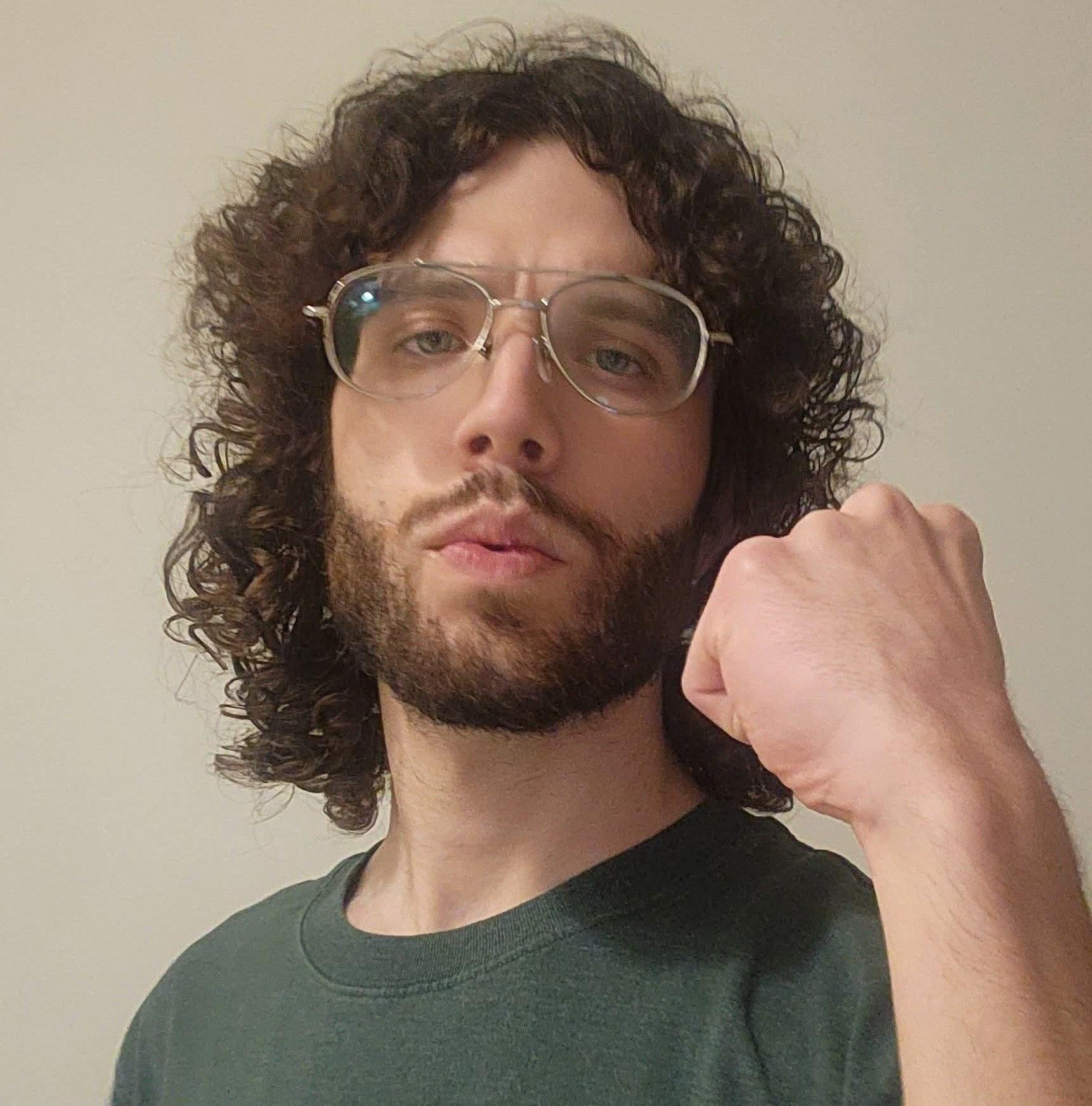
William Polhamus
Data Analyst, Website Creation, Research.
William Polhamus is a lifelong citizen of West Virginia. He has worked as a delivery driver, and currently works as an intern in IT,
and a housekeeper as a secondary job. His academic background includes an associate's degree in Software Development Engineering (2026)
from Blue Ridge Community and Technical College in Martinsburg, West Virginia.
He enjoys many hobbies and consuming arts, like exercising, creating websites and software, guitar, Spanish, jazz, and civic engagement.
A lot of his life is dedicated to building tools and resources that help people heal, learn, and understand the world around them.
Will's efforts with the project are inspired by seeing the massive amounts of misinformed and fragamented information and hateful rhetoric.
His main goal is to assist with informing the public on important topics and how we can come together as a community to make our world a better
place.